
Hair styling clays promise a combination that many people want but few formulas truly deliver: strong hold, natural texture, and a matte finish without leaving hair stiff or greasy. The challenge is that these claims often depend more on the formulation than the marketing, making the ingredient list far more informative than the product description alone.
Aveda Men Pure-Formance Grooming Clay has built a loyal following by positioning itself as a lightweight styling product that creates texture while maintaining flexibility. Its formula combines waxes, plant oils, polymers, absorbent powders, and botanical extracts instead of relying on a traditional heavy wax base. At first glance, that makes it an interesting product from a formulation standpoint.
Still, ingredient lists rarely tell the whole story unless they’re interpreted carefully. In this review, I’ll break down what each key ingredient is actually doing, how well the supporting scientific evidence matches the product’s intended purpose, where the formula looks strongest, and where its limitations deserve a closer look.
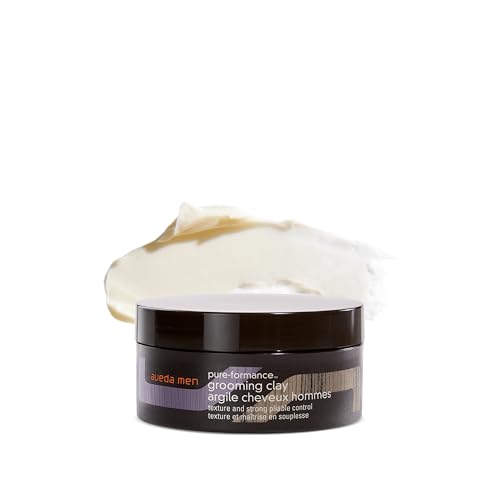
Aveda Men Pure-Formance Grooming Clay Ingredients at a Glance
The ingredient list below is taken from Aveda’s current official product information. The company also notes that formulas may change over time or vary slightly between countries, so always check the packaging you receive for the most up-to-date list.
- Water (Aqua, Eau)
- Canola Oil
- Hydrogenated Castor Oil
- Cetyl Alcohol
- Oryza Sativa (Rice) Bran Wax
- C14-22 Alcohols
- Steareth-21
- PVP
- Glycerin
- Alcohol Denat.
- Aluminum Starch Octenylsuccinate
- Silica
- Starch Hydroxypropyltrimonium Chloride
- Zea Mays (Corn) Starch
- Orbignya Oleifera (Babassu) Seed Oil
- Calophyllum Inophyllum Seed Oil
- Rosmarinus Officinalis (Rosemary) Leaf Extract
- Glycyrrhiza Inflata Root Extract
- Glycine Soja (Soybean) Oil
- Hydrolyzed Algin
- Yeast Extract
- Kaolin
- Tocopherol
- Ursolic Acid
- Sodium Chloride
- C12-20 Alkyl Glucoside
- PEG-100 Stearate
- Glyceryl Stearate
- Fragrance (Parfum)
- Citral
- Geraniol
- Linalool
- Farnesol
- Benzyl Benzoate
- Citronellol
- Coumarin
- Eugenol
- Limonene
- Potassium Sorbate
- Sodium Benzoate
- Phenoxyethanol
Aveda Men Pure-Formance Grooming Clay Ingredients: My Analysis
Looking beyond the botanical branding, this formula relies on a combination of styling agents, absorbent minerals, conditioning oils, and film-forming polymers. The balance between these groups determines how the product performs far more than any individual plant extract.
Hydrogenated Castor Oil and Rice Bran Wax
These two ingredients form much of the product’s structural backbone. Hydrogenated castor oil is a hardened vegetable oil that increases firmness and helps create flexible hold, while rice bran wax contributes texture and supports the matte appearance. Together they create the clay-like consistency users expect.
Unlike simple petroleum waxes, vegetable-derived waxes can provide hold while remaining relatively pliable. What stands out to me is that Aveda combines multiple waxes rather than depending on one dominant ingredient, which often produces a more workable finish throughout the day.
The manufacturer does not disclose the exact concentration of either ingredient. Since both appear near the beginning of the ingredient list, they likely make a meaningful contribution to the styling performance, although ingredient order cannot confirm their actual percentages.
These ingredients are generally considered safe for cosmetic use according to reviews by the Cosmetic Ingredient Review Expert Panel. Allergic reactions are uncommon, although heavily wax-based products may require a thorough shampoo to remove buildup with frequent use.
PVP
PVP, or polyvinylpyrrolidone, is one of the formula’s primary film-forming polymers. It creates an invisible coating around hair fibers that helps maintain shape after styling while still allowing some flexibility.
I was pleased to find PVP positioned relatively high in the ingredient list because it supports one of the product’s primary claims: providing hold without excessive stiffness. This polymer has been used in professional hair products for decades because of its predictable styling performance.
Research evaluating cosmetic film-forming polymers consistently supports their effectiveness for temporary hair fixation, although the available evidence demonstrates the performance of the ingredient itself rather than this finished formulation. The exact concentration remains undisclosed, making it impossible to compare directly with products tested in laboratory settings.
Silica, Aluminum Starch Octenylsuccinate, and Kaolin
These three ingredients largely explain the matte finish that distinguishes this product from shinier pomades. Silica and aluminum starch absorb excess oil, while kaolin clay contributes texture and reduces visible shine.
Many consumers assume kaolin alone creates the styling effect, but I think the combination is more important. Silica improves oil absorption, starch helps reduce tackiness, and kaolin adds grip. Working together, they create a drier finish than any one ingredient could achieve alone.
There is extensive cosmetic evidence supporting the oil-absorbing properties of silica and kaolin, although most research focuses on their physical characteristics rather than clinical outcomes. Their performance depends largely on formulation rather than biological activity.
The manufacturer does not disclose individual concentrations. Their placement in the middle of the ingredient list suggests moderate rather than trace amounts, but this cannot establish their exact levels.
Glycerin and Plant Oils
Glycerin is one of the best studied cosmetic humectants. It attracts water to help maintain hair flexibility and reduce excessive dryness. Alongside it are babassu oil, tamanu oil, canola oil, and soybean oil, which function primarily as conditioning emollients.
Evidence supporting glycerin’s moisturizing ability is strong, including research summarized by DermNet. However, most studies examine skin hydration rather than styling products, so the results cannot automatically be applied to hair clay performance.
My impression is that these conditioning ingredients help offset the drying effect of alcohol and absorbent powders. That balance may explain why many users describe the product as workable rather than overly stiff. Since the concentrations are not disclosed, however, it’s impossible to determine how much conditioning they contribute relative to the styling agents.
Rosemary Extract, Glycyrrhiza Inflata Root Extract, Yeast Extract, and Ursolic Acid
Aveda highlights several botanical ingredients that fit its plant-focused brand identity. Rosemary extract provides antioxidant compounds, Glycyrrhiza inflata root extract contains licorice-derived flavonoids, yeast extract supplies peptides and amino acids, and ursolic acid is a naturally occurring triterpenoid found in many plants.
The evidence behind these ingredients deserves a careful interpretation. Laboratory and early human research suggests that rosemary and ursolic acid may support scalp health under certain conditions, while licorice extracts demonstrate anti-inflammatory properties in experimental studies. Reviews available through the PubMed database show encouraging findings, but much of the evidence comes from isolated ingredients, oral supplementation, laboratory experiments, or leave-on scalp treatments rather than styling clays.
I am less convinced that these botanical ingredients significantly influence the product’s styling performance. Their position lower in the ingredient list suggests they may be present in relatively small amounts, although ingredient order alone cannot determine concentration. They may contribute supporting antioxidant or conditioning benefits, but the available evidence does not prove this finished product will deliver measurable improvements in hair growth, scalp health, or hair strength.
Other Ingredients
- Water (Aqua): Primary solvent that disperses the ingredients and creates the product’s cream-like texture. No meaningful safety concerns under normal cosmetic use.
- Canola Oil: Emollient that softens hair and improves spreadability. Generally well tolerated, although plant oil allergies are possible in sensitive individuals.
- Cetyl Alcohol: Fatty alcohol that thickens and conditions the formula. Unlike drying alcohols, it is usually non-irritating.
- C14-22 Alcohols: Fatty alcohol blend that stabilizes the emulsion and improves texture. Low irritation risk in cosmetic concentrations.
- Steareth-21: Emulsifier that keeps oil and water mixed. Considered safe in rinse-off and leave-on cosmetics at permitted levels.
- Alcohol Denat.: Fast-evaporating solvent that improves application and drying time. It may increase dryness in very sensitive scalps.
- Starch Hydroxypropyltrimonium Chloride: Conditioning modified starch that improves manageability while reducing static electricity.
- Zea Mays (Corn) Starch: Absorbent powder that contributes texture and reduces oiliness with minimal safety concerns.
- Hydrolyzed Algin: Marine-derived conditioning ingredient that helps maintain product texture and moisture balance.
- Tocopherol: Vitamin E antioxidant that helps protect oils in the formula from oxidation while providing minor conditioning benefits.
- Sodium Chloride: Viscosity adjuster used to control consistency. Usually well tolerated.
- C12-20 Alkyl Glucoside: Plant-derived emulsifier that improves formulation stability with a low risk of irritation.
- PEG-100 Stearate: Emulsifier that keeps the formula uniform. Current cosmetic safety assessments support its use as formulated.
- Glyceryl Stearate: Emollient and stabilizer that contributes a smoother texture and improves spreadability.
- Fragrance (Parfum): Provides the signature scent. Fragrance mixtures remain one of the more common causes of cosmetic contact allergy in susceptible individuals.
- Citral: Fragrance component that can trigger allergic reactions in fragrance-sensitive users.
- Geraniol: Fragrance ingredient naturally found in essential oils. A recognized fragrance allergen for some people.
- Linalool: Fragrance compound that may become more sensitizing after oxidation during storage.
- Farnesol: Fragrance ingredient with occasional sensitization potential in susceptible users.
- Benzyl Benzoate: Fragrance component and solvent. Rarely causes irritation at cosmetic concentrations.
- Citronellol: Scent ingredient that may trigger fragrance allergy in sensitive individuals.
- Coumarin: Fragrance component used in many perfumes. Skin allergy is uncommon but well documented.
- Eugenol: Aromatic fragrance ingredient that can cause contact allergy in susceptible users.
- Limonene: Citrus fragrance ingredient that may oxidize over time, increasing sensitization potential.
- Potassium Sorbate: Preservative that inhibits mold and yeast growth. Generally well tolerated.
- Sodium Benzoate: Widely used preservative with an excellent cosmetic safety record at approved concentrations.
- Phenoxyethanol: Preservative that protects against microbial contamination. Safety assessments support its use within established cosmetic limits.
Safety Concerns and Controversies
From an ingredient perspective, the most relevant concern is fragrance rather than the styling agents themselves. The formula contains parfum along with multiple declared fragrance allergens, including limonene, linalool, citral, geraniol, and eugenol. Most users will not experience problems, but individuals with fragrance allergies, eczema, or a history of allergic contact dermatitis should exercise extra caution. Guidance from the DermNet fragrance allergy resource explains why these ingredients can affect susceptible people even though they are widely permitted in cosmetics.
Alcohol denat. may contribute to dryness when used repeatedly on already dry hair or an irritated scalp, although the conditioning oils and glycerin likely help balance this effect. I did not find evidence that the product contains ingredients presenting significant systemic safety concerns when used as intended.
Some online discussions question synthetic polymers, PEG ingredients, or preservatives such as phenoxyethanol. Current evaluations by cosmetic safety authorities do not support claims that these ingredients are harmful in approved cosmetic concentrations. Those concerns are very different from proven risks, which in this formula are mainly limited to potential irritation or allergy in susceptible individuals.
Aveda Men Pure-Formance Grooming Clay: My Verdict
Overall, I think this is a thoughtfully designed styling product whose ingredient list aligns well with its intended purpose. The combination of waxes, film-forming polymer, absorbent minerals, conditioning oils, and humectants creates a formulation that logically supports flexible hold, texture, and a matte finish. The botanical extracts are a nice addition, but they are not the primary reason I would consider this product.
My biggest limitation is the lack of disclosed ingredient concentrations. Without that information, it is impossible to judge how closely the formula matches the conditions used in published research. The evidence supporting the major styling ingredients is strong, but that should not be confused with proof that every marketing claim has been clinically demonstrated for this specific product.
Based on the available evidence, I consider Aveda Men Pure-Formance Grooming Clay worth considering for people looking for a flexible matte styling clay, particularly those who appreciate a balanced blend of traditional styling agents and conditioning ingredients. The main group that may want to look elsewhere is anyone with known fragrance sensitivity, as the extensive fragrance composition increases the likelihood of irritation compared with fragrance-free alternatives.
Disclaimer
This review is based primarily on the published ingredient list and currently available scientific research. Evidence supporting individual ingredients does not guarantee identical results for every user or prove the finished product performs the same in all situations. This article is educational and should not replace personalized medical advice when needed.