
Uneven skin tone, lingering post-acne marks, redness, and occasional breakouts can be frustrating because they often require more than a basic moisturizer or cleanser. Many people look for products that can target several of these concerns without adding excessive irritation.
Paula’s Choice 10% Azelaic Acid Booster is designed to do exactly that. It combines 10% azelaic acid with 0.5% salicylic acid and several soothing ingredients, making it an interesting option for people seeking brighter, calmer-looking skin through a lightweight leave-on treatment.
Still, marketing claims only tell part of the story. The ingredient list deserves a closer look because the success of any skincare product depends on much more than a headline ingredient. In this review, you’ll learn what the formula contains, what current research actually supports, and where important uncertainties remain.
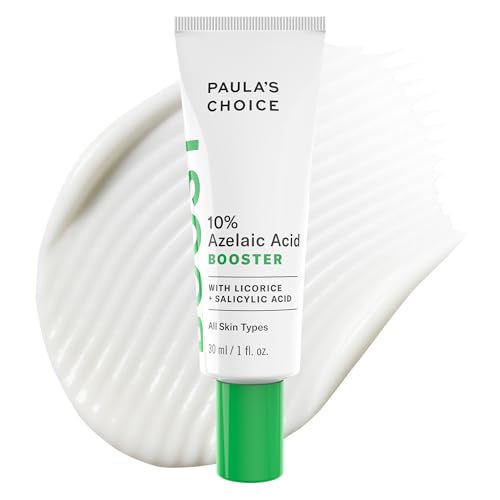
Paula’s Choice 10% Azelaic Acid Booster Ingredients at a Glance
The current official formula lists a relatively compact blend of active, moisturizing, soothing, and texture-enhancing ingredients. Formulas may change over time or vary slightly between countries, so always check the product label before purchasing.
- Water (Aqua)
- Azelaic Acid (10%)
- C12-15 Alkyl Benzoate
- Caprylic/Capric Triglyceride
- Methyl Glucose Sesquistearate
- Glycerin
- Cetearyl Alcohol
- Glyceryl Stearate
- Dimethicone
- Salicylic Acid (0.5%)
- Adenosine
- Glycyrrhiza Glabra (Licorice) Root Extract
- Boerhavia Diffusa Root Extract
- Allantoin
- Bisabolol
- Cyclopentasiloxane
- Xanthan Gum
- Sclerotium Gum
- Propanediol
- Butylene Glycol
- Phenoxyethanol
Paula’s Choice 10% Azelaic Acid Booster Ingredients: My Analysis
The formula focuses on a handful of ingredients that directly support its advertised goals rather than relying on a long list of trendy botanical extracts. What stands out to me is that the product openly discloses the concentrations of its two primary active ingredients.
Azelaic Acid
Azelaic acid is unquestionably the centerpiece of this formula. Paula’s Choice discloses a 10% concentration, which removes much of the guesswork that often surrounds cosmetic ingredient reviews. According to the official product information, this is the product’s primary active ingredient.
Azelaic acid is a naturally occurring dicarboxylic acid found in grains such as wheat and barley, although cosmetic versions are manufactured for consistency and purity. It has anti-inflammatory, antioxidant, and pigment-regulating properties that make it unusually versatile.
Clinical evidence supporting topical azelaic acid is encouraging. Research summarized in peer-reviewed dermatology literature and guidance from DermNet shows benefits for acne, post-inflammatory pigmentation, and facial redness. However, much of the strongest evidence involves prescription products containing 15% or 20% azelaic acid.
The evidence I found still makes this 10% concentration promising, especially because modern formulations can influence performance. Even so, the available research doesn’t prove this exact cosmetic product will deliver identical results to prescription-strength preparations using different formulations.
Salicylic Acid
The second key active ingredient is salicylic acid, which the manufacturer discloses at 0.5%. Unlike many cosmetic formulas, this concentration is clearly stated instead of left for consumers to guess.
Salicylic acid is a beta hydroxy acid that penetrates into oily pores and helps loosen dead skin cells. It has substantial evidence supporting its role in improving acne-prone skin through gentle exfoliation and reduced pore blockage, according to the American Academy of Dermatology.
I like that Paula’s Choice doesn’t rely on salicylic acid alone. Pairing a lower concentration with azelaic acid creates a formula aimed at multiple pathways involved in blemishes and uneven tone. Still, most clinical studies evaluate salicylic acid independently rather than in this exact combination.
Licorice Root Extract
Licorice root extract is included primarily for its soothing and skin-brightening properties. Its best-known active compounds, including glabridin, may help reduce excess pigment production while calming irritated skin.
Published laboratory and clinical research suggests licorice-derived compounds can improve hyperpigmentation and reduce visible inflammation. Reviews in peer-reviewed dermatology literature describe promising evidence, although study quality varies considerably.
The manufacturer doesn’t disclose the amount used here. That means its concentration cannot be determined, making it impossible to judge how closely this product matches published research. I see this ingredient as a useful supporting addition rather than the main reason to buy the formula.
Adenosine
Adenosine is a naturally occurring molecule found throughout the human body and is commonly included in skincare because of its soothing and skin-restoring properties.
Some clinical studies suggest topical adenosine may modestly improve the appearance of fine lines by supporting skin function. The available evidence is encouraging, although it isn’t nearly as extensive as the research supporting azelaic acid.
What I find less impressive is that the manufacturer doesn’t disclose its concentration. Without that information, it’s difficult to estimate how much this ingredient contributes to the product’s overall performance compared with the better-established active ingredients.
Other Ingredients
- C12-15 Alkyl Benzoate: Lightweight emollient that improves spreadability and leaves a less greasy finish. It’s generally well tolerated in topical skincare.
- Caprylic/Capric Triglyceride: Emollient derived from glycerin and coconut or palm fatty acids. Helps soften skin and reduce moisture loss with a low risk of irritation.
- Methyl Glucose Sesquistearate: Emulsifier that keeps oil and water blended into a stable cream. It’s considered safe in typical cosmetic use.
- Glycerin: Humectant that attracts water into the outer skin layer, helping improve hydration. Supported by extensive safety and effectiveness data.
- Cetearyl Alcohol: Fatty alcohol that thickens the formula and softens skin. Unlike drying alcohols, it’s generally non-irritating for most users.
- Glyceryl Stearate: Emollient and emulsifier that improves texture while helping maintain a stable formulation. Widely regarded as safe in cosmetics.
- Dimethicone: Silicone-based skin protectant that reduces water loss and improves glide. It rarely causes irritation and doesn’t typically clog pores.
- Boerhavia Diffusa Root Extract: Botanical extract included for soothing and antioxidant support. Human evidence remains limited compared with laboratory research.
- Allantoin: Skin protectant that helps reduce irritation and supports the skin barrier. Frequently used in products for sensitive skin.
- Bisabolol: Soothing ingredient commonly derived from chamomile or produced synthetically. It may help reduce visible irritation and is generally well tolerated.
- Cyclopentasiloxane: Volatile silicone that improves spreadability and leaves a silky finish before evaporating from the skin.
- Xanthan Gum: Thickener and stabilizer that helps maintain the product’s consistency without contributing active skincare benefits.
- Sclerotium Gum: Natural polysaccharide thickener that improves texture and formulation stability. It has an excellent cosmetic safety profile.
- Propanediol: Solvent and humectant that improves ingredient delivery and skin feel. It’s usually well tolerated.
- Butylene Glycol: Humectant and solvent that helps retain moisture and dissolve ingredients. Mild irritation is possible in particularly sensitive individuals.
- Phenoxyethanol: Preservative that protects the product from microbial contamination. Current cosmetic safety assessments support its use within approved concentration limits.
Safety Concerns and Controversies
For most healthy adults, the formula appears well balanced from a safety perspective. The primary concerns are the same ones seen with many leave-on exfoliating products, including temporary stinging, dryness, peeling, or irritation, especially during the first weeks of use.
People with very sensitive skin, eczema, or a damaged skin barrier may wish to introduce the product gradually. Combining it with several other exfoliating acids or prescription retinoids can increase irritation, even though the individual ingredients are generally well studied.
I found little evidence supporting many online claims that ingredients such as dimethicone or phenoxyethanol are inherently dangerous in normal cosmetic use. Current reviews by cosmetic safety experts and regulatory authorities don’t support those broad conclusions when these ingredients are used as intended.
Paula’s Choice 10% Azelaic Acid Booster: My Verdict
I think this is one of the stronger over-the-counter azelaic acid formulations currently available because the manufacturer clearly discloses both 10% azelaic acid and 0.5% salicylic acid. That transparency makes the formula much easier to evaluate than many competing products.
The supporting ingredients also make sense. Humectants, emollients, soothing agents, and barrier-supporting ingredients help offset some of the irritation that active exfoliating ingredients can cause. I was pleased to see the formula avoids unnecessary fragrance, which may improve suitability for sensitive skin.
No cosmetic product can guarantee improvements, and some supporting ingredients lack disclosed concentrations. Still, the main actives are backed by meaningful human evidence, and the formulation logically supports the product’s intended purpose. From an ingredient perspective, I believe it’s worth considering for people seeking help with uneven tone, mild acne, and post-inflammatory discoloration.
Disclaimer
This review is based primarily on the published ingredient list and available scientific research. Even well-studied ingredients don’t guarantee identical results for every user. The article is educational and shouldn’t replace personalized advice from a qualified healthcare professional.