
Finding a foundation that provides natural-looking coverage without settling into fine lines can be challenging, especially if your skin has become drier or more textured with age. Products that promise to adapt to your complexion while delivering skincare benefits naturally attract attention.
Prime Prometics Color Changing Foundation is marketed as a solution for mature and sensitive skin. The brand highlights self-adjusting pigments, lightweight coverage, hydrating ingredients, and several well-known skincare actives that sound promising on paper.
Still, marketing claims only tell part of the story. The ingredient list often reveals much more about how a product is likely to perform. In this review, we’ll examine the formula ingredient by ingredient, separate established evidence from advertising claims, and discuss whether the formulation appears to justify its promises.
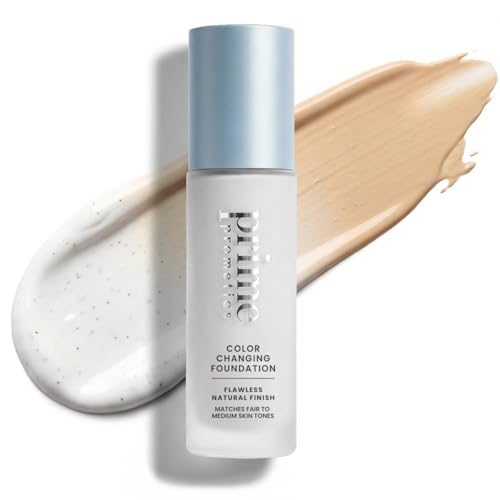
Prime Prometics Color Changing Foundation Ingredients at a Glance
The ingredient list below comes from the manufacturer’s current published formula. As with many cosmetics, formulations may change over time or differ slightly between countries.
- Aqua
- Cyclopentasiloxane
- Glycerin
- C12-15 Alkyl Benzoate
- Ethylhexyl Palmitate
- Dimethicone
- Propylene Glycol
- Ethylhexyl Methoxycinnamate
- Caprylic/Capric Triglyceride
- Sorbitol
- Lauryl PEG-10 Tris(Trimethylsiloxy)Silylethyl Dimethicone
- Petrolatum
- Synthetic Fluorphlogopite
- Sodium Chloride
- Polyglyceryl-3 Diisostearate
- Tridecyl Trimellitate
- Niacinamide
- Bisabolol
- Squalane
- Simmondsia Chinensis (Jojoba) Seed Oil
- Palmitoyl Tripeptide-5
- Tocopherol
- Trehalose
- Sophora Flavescens Root Extract
- Ophiopogon Japonicus Root Extract
- Opuntia Ficus-Indica Stem Extract
- Buddleja Officinalis Extract
- Aluminum Hydroxide
- Sorbitan Sesquioleate
- Dimethiconol
- Dimethicone Crosspolymer
- Stearic Acid
- Pentylene Glycol
- Ethoxydiglycol
- Propanediol
- 1,2-Hexanediol
- Mica
- Silica
- Silica Dimethyl Silylate
- Silica Silylate
- Disteardimonium Hectorite
- Polyester-1
- Methicone
- Triethoxycaprylylsilane
- Phenoxyethanol
- Hydroxyacetophenone
- BHT
- Parfum
- Titanium Dioxide
- CI 77492
- CI 77891
- CI 77491
- CI 77499
Prime Prometics Color Changing Foundation Ingredients: My Analysis
Several ingredients deserve much closer attention than the rest because they’re most likely responsible for both the makeup performance and the skincare claims. What stood out to me is that the formula combines traditional silicone foundation technology with a handful of recognizable skincare ingredients.
Niacinamide
Niacinamide, also called vitamin B3, is one of the better-supported skincare ingredients found in modern cosmetics. It’s widely used because it can help strengthen the skin barrier, improve hydration, and reduce uneven skin tone, according to DermNet’s overview of niacinamide.
I was pleased to find niacinamide positioned around the middle of the ingredient list rather than near the end. The manufacturer doesn’t disclose the exact concentration, so its placement cannot confirm how much is actually present.
Clinical research has shown that topical niacinamide can improve pigmentation, fine lines, and skin barrier function when used consistently over several weeks, with many studies using concentrations between 2% and 5%, including findings summarized in peer-reviewed clinical research.
The evidence for niacinamide itself is convincing. However, I am less convinced that occasional foundation wear alone would deliver the same skincare improvements seen in dedicated treatment products applied every day.
Bisabolol
Bisabolol is a soothing compound commonly derived from chamomile, although synthetic versions are also available. It’s frequently included in products designed for sensitive or easily irritated skin because of its calming properties.
Research suggests bisabolol possesses anti-inflammatory and skin-soothing activity, making it a logical addition to foundations intended for mature or reactive complexions. Reviews published in dermatology literature generally support these effects, although much of the evidence focuses on the ingredient itself rather than finished cosmetic products.
The manufacturer doesn’t reveal its concentration. Since bisabolol appears after niacinamide, it may be present in a relatively modest amount, although ingredient order cannot establish the exact percentage.
From my perspective, bisabolol strengthens the overall formula even if its contribution is likely supportive rather than transformative. It’s unlikely to replace dedicated treatments for persistent redness but may improve everyday comfort during wear.
Squalane
Squalane is a stable moisturizing lipid that closely resembles compounds naturally found in human skin. Unlike older forms of squalene, squalane is much more resistant to oxidation, making it popular in modern cosmetic formulations.
Its main role is improving skin softness while reducing moisture loss. Reviews of moisturizers containing squalane indicate it functions as an effective emollient and supports the skin barrier without feeling particularly greasy.
The available evidence supports squalane as a moisturizing ingredient generally. It doesn’t prove that this specific foundation delivers long-term hydration comparable to a leave-on moisturizer, especially because the concentration isn’t disclosed.
Still, I can easily see why it was included. Mature skin often benefits from additional emollients, and squalane complements the silicone base instead of competing with it.
Palmitoyl Tripeptide-5
Palmitoyl Tripeptide-5 is a synthetic peptide marketed for supporting collagen production and improving the appearance of aging skin. Peptides have become increasingly common in premium cosmetics, although their evidence varies considerably.
Some laboratory and small human studies suggest this peptide may improve skin firmness and reduce the appearance of wrinkles over time. However, most supporting research involves dedicated skincare products rather than makeup formulas worn for limited hours each day.
My main concern is that the manufacturer doesn’t disclose the amount used. The peptide appears well below several other ingredients, suggesting it may be included in a relatively small quantity, although this observation cannot determine the actual concentration.
The ingredient is promising, but I would have more confidence if stronger clinical evidence existed for this exact formulation rather than peptide technology in general.
Other Ingredients
- Cyclopentasiloxane: A lightweight silicone that helps the foundation spread evenly and creates a smooth finish. It evaporates after application, reducing heaviness. Current cosmetic safety assessments consider it safe at typical use levels.
- Glycerin: A well-studied humectant that attracts water into the outer skin layers, helping reduce dryness during wear. It’s generally well tolerated, even by sensitive skin.
- C12-15 Alkyl Benzoate: A lightweight emollient that improves slip and reduces the greasy feel of richer oils. It has a low irritation profile for most users.
- Ethylhexyl Palmitate: An emollient ester that softens skin and improves blendability. Some acne-prone users may find richer esters less suitable, although evidence varies between individuals.
- Dimethicone: A silicone emollient that improves texture, fills fine lines temporarily, and reduces water loss. Extensive safety reviews support its use in cosmetics.
- Propylene Glycol: A humectant and solvent that enhances ingredient penetration. It can occasionally irritate very sensitive or compromised skin.
- Ethylhexyl Methoxycinnamate: A UVB sunscreen filter that helps reduce UV exposure within the formula. It shouldn’t replace a dedicated broad-spectrum sunscreen because coverage and application thickness differ.
- Caprylic/Capric Triglyceride: A lightweight emollient derived from coconut and glycerin that softens skin and improves product spreadability. It’s generally considered low risk.
- Sorbitol: A humectant that helps retain moisture and improves skin feel throughout the day.
- Lauryl PEG-10 Tris(Trimethylsiloxy)Silylethyl Dimethicone: A silicone emulsifier that stabilizes water and oil phases for a smoother application.
- Petrolatum: A highly effective occlusive moisturizer that helps reduce moisture loss. Cosmetic-grade petrolatum has an excellent safety record when properly refined.
- Synthetic Fluorphlogopite: A synthetic mica that provides brightness and a smoother optical finish without relying on natural mineral variability.
- Sodium Chloride: Adjusts product viscosity. High amounts may destabilize some formulas, but typical cosmetic levels pose little concern.
- Polyglyceryl-3 Diisostearate: An emulsifier that keeps oil and water evenly mixed while contributing to a creamy texture.
- Tridecyl Trimellitate: An emollient that improves wear time and enhances pigment adhesion.
- Jojoba Seed Oil: A plant-derived emollient that helps soften skin. It closely resembles natural skin oils and is generally well tolerated.
- Tocopherol: Vitamin E functions primarily as an antioxidant that helps protect the formula from oxidation while providing modest skin-conditioning benefits.
- Trehalose: A sugar-derived humectant that supports moisture retention and may help protect skin from dehydration.
- Sophora Flavescens Root Extract: A botanical extract with antioxidant and soothing potential. Human evidence remains limited compared with established skincare ingredients.
- Ophiopogon Japonicus Root Extract: Included for moisturizing and antioxidant support. Most evidence comes from laboratory research rather than robust clinical trials.
- Opuntia Ficus-Indica Stem Extract: Cactus extract that contributes antioxidants and skin-conditioning properties. Clinical evidence in finished cosmetics is still limited.
- Buddleja Officinalis Extract: A botanical antioxidant included to support skin protection against environmental stress. Human evidence remains preliminary.
- Aluminum Hydroxide: A pigment coating agent that improves stability and color performance. It isn’t the same as aluminum exposure from food or medicine.
- Sorbitan Sesquioleate: An emulsifier that stabilizes the formula. Rare allergic reactions have been reported in susceptible individuals.
- Dimethiconol: A silicone polymer that enhances smoothness, flexibility, and long-lasting wear.
- Dimethicone Crosspolymer: Improves the silky feel, reduces shine, and helps blur the appearance of pores and fine lines.
- Stearic Acid: A fatty acid that functions as an emulsifier and thickener. It’s widely used and generally well tolerated.
- Pentylene Glycol: A humectant and preservative booster that also helps improve product texture.
- Ethoxydiglycol: A solvent that helps dissolve ingredients evenly throughout the formulation.
- Propanediol: A humectant and solvent that enhances hydration while improving ingredient distribution.
- 1,2-Hexanediol: Functions as both a humectant and preservative booster with a favourable cosmetic safety profile.
- Mica: A mineral that adds luminosity and improves the cosmetic finish without affecting skincare performance.
- Silica: Absorbs excess oil and improves the soft-focus appearance of skin.
- Silica Dimethyl Silylate: A thickener that improves product stability and helps suspend pigments evenly.
- Silica Silylate: Helps control texture, improves spreadability, and contributes to a smoother finish.
- Disteardimonium Hectorite: A clay-derived stabilizer that prevents pigments from separating during storage.
- Polyester-1: A film-forming polymer that improves durability and wear time.
- Methicone: A silicone conditioning agent that contributes to a smoother application and improved water resistance.
- Triethoxycaprylylsilane: Coats mineral pigments to improve dispersion and wear.
- Phenoxyethanol: A widely used preservative that helps prevent microbial contamination. It’s considered safe within regulated cosmetic limits.
- Hydroxyacetophenone: An antioxidant and preservative booster that also provides mild soothing properties.
- BHT: An antioxidant that protects oils from oxidation. Current cosmetic exposure levels are considered safe by major regulatory reviews.
- Parfum: Provides fragrance. It can trigger irritation or allergy in fragrance-sensitive individuals, although most users tolerate it well.
- Titanium Dioxide: A white mineral pigment that contributes opacity and colour. In this product, it functions mainly as a cosmetic pigment.
- CI 77492, CI 77891, CI 77491, CI 77499: Iron oxides and mineral pigments that provide the foundation’s shade and colour-adjusting properties. These pigments have long cosmetic safety records.
Safety Concerns and Controversies
Overall, I don’t see any major ingredient that raises significant safety concerns when the foundation is used as directed. Most of the formula consists of well-established cosmetic ingredients with extensive safety assessments supporting normal topical use.
The biggest consideration is fragrance. Although fragrance isn’t inherently harmful, it remains one of the more common causes of cosmetic sensitivity. If your skin reacts easily or you have fragrance allergies, this ingredient deserves extra attention.
Some online discussions also question ingredients such as phenoxyethanol, BHT, silicones, or Ethylhexyl Methoxycinnamate. Current evidence and regulatory reviews don’t support avoiding these ingredients in cosmetics simply because they’re present. The risk depends on exposure, concentration, and how the product is actually used, not merely their inclusion on an ingredient list.
Prime Prometics Color Changing Foundation: My Verdict
From an ingredient perspective, I think this is a thoughtfully designed formula. The silicone base should provide the smooth finish most users expect, while glycerin, squalane, niacinamide, bisabolol, and several emollients offer meaningful support for skin comfort during wear.
What I find less impressive is that none of the featured skincare ingredients have disclosed concentrations. The available evidence supports these ingredients individually, but it doesn’t prove this particular foundation will deliver the same long-term skincare benefits reported in dedicated treatment products.
Overall, I’d consider Prime Prometics Color Changing Foundation worth considering, especially for normal, dry, or mature skin seeking lightweight coverage with added moisturizing ingredients. I wouldn’t purchase it solely for its anti-aging claims, but as a foundation with sensible supporting skincare ingredients, the formula appears balanced, practical, and generally well constructed.
Disclaimer
This review is based primarily on the published ingredient list and current scientific evidence. Effective ingredients don’t guarantee identical results for every user. Individual skin type, application, and overall skincare routine all influence performance. This article is educational and isn’t a substitute for personalised medical advice.