
Dark spots, post-acne marks, and uneven skin tone are some of the most stubborn skincare concerns. Even after the original trigger fades, lingering pigmentation can remain for months, leading many people to look for products that promise brighter, more even-looking skin.
La Roche-Posay Mela B3 Serum is designed specifically for this purpose. It combines the company’s patented Melasyl™ molecule with 10% niacinamide, while also including several supporting ingredients that target hydration, gentle exfoliation, and skin barrier support. On paper, the formula looks thoughtfully assembled.
Still, ingredient names alone don’t guarantee results. The formula deserves a closer look because published research on some ingredients is much stronger than others, and the finished product doesn’t disclose every active concentration. Here’s what the ingredients can realistically tell you.
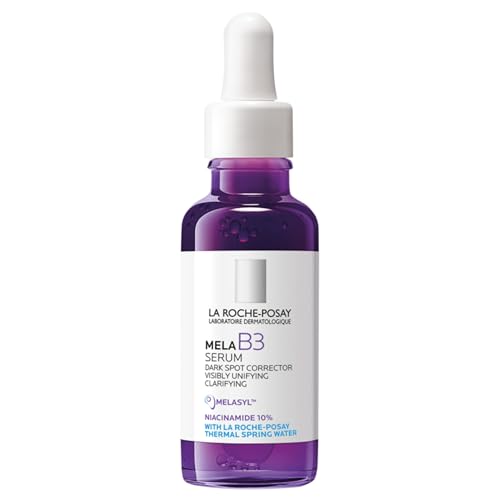
La Roche-Posay Mela B3 Serum Ingredients at a Glance
The official ingredient list may vary slightly between countries or as formulas are updated. The list below reflects the current official formulation available for major international markets.
- Aqua / Water / Eau
- Dimethicone
- Niacinamide
- Glycerin
- Propylene Glycol
- Polysilicone-11
- Silica
- Bis-PEG/PPG-16/16 PEG/PPG-16/16 Dimethicone
- Cystoseira Tamariscifolia Extract
- 2-Mercaptonicotinoyl Glycine (Melasyl™)
- PEG-20 Methyl Glucose Sesquistearate
- Sodium Hyaluronate
- Sodium Hydroxide
- Sodium Thiosulfate
- Carnosine
- Poloxamer 338
- Ammonium Polyacryloyldimethyl Taurate
- Dipotassium Glycyrrhizate
- Caprylic/Capric Triglyceride
- Capryloyl Salicylic Acid
- Caprylyl Glycol
- Citric Acid
- Trisodium Ethylenediamine Disuccinate
- Xanthan Gum
- Pentylene Glycol
- Octyldodecanol
- Retinyl Palmitate
- Tocopherol
- Pentaerythrityl Tetra-di-t-Butyl Hydroxyhydrocinnamate
- Phenoxyethanol
- CI 17200 (Red 33)
- Parfum / Fragrance
La Roche-Posay Mela B3 Serum Ingredients: My Analysis
The formula combines established brightening ingredients with a newer patented molecule. Some parts of the formula are supported by years of research, while others are still building their evidence base.
Niacinamide
Niacinamide is the ingredient that immediately stands out to me. La Roche-Posay officially states that the serum contains 10% niacinamide, making it one of the few active ingredients with a disclosed concentration.
Niacinamide is a form of vitamin B3 that helps reduce pigment transfer between skin cells while strengthening the skin barrier. Multiple human clinical studies have shown improvements in uneven pigmentation, fine lines, and skin barrier function.
Because the concentration is disclosed, it’s easier to compare with published research. However, studies vary in duration, formulation, and participant characteristics. The available evidence supports niacinamide generally, but it doesn’t prove this specific serum will produce identical results.
I also like that niacinamide tends to be well tolerated by many skin types. Mild irritation remains possible, especially when several active products are introduced together.
Melasyl™ (2-Mercaptonicotinoyl Glycine)
Melasyl™ is La Roche-Posay’s proprietary pigment-targeting ingredient and the product’s signature innovation. According to the manufacturer, it works by intercepting excess melanin precursors before they contribute to visible discoloration.
What I find interesting is that this mechanism differs from older pigment inhibitors. Instead of directly blocking melanin production, it aims to reduce the accumulation of pigment precursors. Early published research suggests promising effects on hyperpigmentation, although the evidence remains considerably smaller than for ingredients such as niacinamide.
The manufacturer does not disclose the exact concentration. That means its amount in this formula cannot be determined, and direct comparisons with published studies are difficult. I would have more confidence if additional independent clinical research becomes available over time.
Current data suggest the ingredient has a favorable tolerability profile, including for sensitive skin, but long-term independent evidence remains more limited than for well-established brightening ingredients.
Capryloyl Salicylic Acid (LHA)
Capryloyl salicylic acid, often called LHA, is a lipophilic derivative of salicylic acid. It’s included to encourage gentle surface exfoliation and support skin renewal.
Research suggests LHA promotes gradual exfoliation with less irritation than traditional exfoliating acids for many users. This can be helpful because fading discoloration often benefits from controlled skin turnover alongside pigment-targeting ingredients.
The exact concentration isn’t revealed, so its contribution cannot be determined from the ingredient list alone. Most supporting studies also involve different formulations, making it difficult to predict how much it contributes within this serum.
Sodium Hyaluronate
Sodium hyaluronate is a smaller form of hyaluronic acid that acts primarily as a humectant. It attracts and holds water in the outer layers of the skin, helping improve hydration and comfort.
I can see why this ingredient was included. Brightening products often perform better when the skin barrier is well hydrated, since dryness can make irritation more noticeable.
The manufacturer does not disclose the exact concentration, so its contribution cannot be determined. While clinical evidence supports topical hyaluronic acid for improving skin hydration, that doesn’t prove this serum delivers the same degree of benefit.
Other Ingredients
- Water (Aqua): Primary solvent that dissolves and distributes the formula’s ingredients. No meaningful safety concerns during normal cosmetic use.
- Dimethicone: Silicone emollient that smooths skin, reduces moisture loss, and improves texture. Generally well tolerated, including by many sensitive skin types.
- Glycerin: Humectant that attracts water into the skin and supports barrier function. Backed by extensive safety and effectiveness data.
- Propylene Glycol: Solvent and humectant that improves ingredient penetration. It may trigger irritation in a small number of sensitive users.
- Polysilicone-11: Film-forming silicone that enhances texture and creates a smoother finish. Considered safe in cosmetic use.
- Silica: Absorbent powder that reduces excess shine and improves product feel. Low risk during normal topical application.
- Bis-PEG/PPG-16/16 PEG/PPG-16/16 Dimethicone: Silicone emulsifier that stabilizes water and oil phases while improving spreadability.
- Cystoseira Tamariscifolia Extract: Marine algae extract included for antioxidant support. Human evidence remains limited compared with established antioxidants.
- PEG-20 Methyl Glucose Sesquistearate: Emulsifier that keeps the formulation stable and evenly mixed.
- Sodium Hydroxide: pH adjuster used in very small amounts to achieve the desired formulation acidity.
- Sodium Thiosulfate: Stabilizing ingredient that helps maintain product integrity. No major safety concerns at cosmetic levels.
- Carnosine: Antioxidant peptide that may help reduce oxidative stress. Clinical evidence for topical pigmentation benefits is still limited.
- Poloxamer 338: Stabilizer and solubilizer that helps distribute ingredients evenly throughout the serum.
- Ammonium Polyacryloyldimethyl Taurate: Thickener that provides the serum’s lightweight gel texture.
- Dipotassium Glycyrrhizate: Licorice-derived soothing ingredient that may help reduce irritation and redness. Generally well tolerated.
- Caprylic/Capric Triglyceride: Lightweight emollient that softens skin and improves product spreadability.
- Caprylyl Glycol: Humectant with preservative-boosting properties that also helps maintain moisture.
- Citric Acid: pH adjuster and mild exfoliating acid. Cosmetic concentrations are typically well tolerated.
- Trisodium Ethylenediamine Disuccinate: Chelating agent that improves formula stability by binding metal ions.
- Xanthan Gum: Natural thickener that provides viscosity and helps stabilize the serum.
- Pentylene Glycol: Humectant and solvent that also supports preservative performance.
- Octyldodecanol: Emollient that improves skin feel and reduces moisture loss.
- Retinyl Palmitate: Vitamin A derivative with antioxidant properties. It is less potent than prescription retinoids, and evidence for topical pigmentation improvement is comparatively limited.
- Tocopherol: Vitamin E antioxidant that helps protect the formula and supports skin against oxidative stress.
- Pentaerythrityl Tetra-di-t-Butyl Hydroxyhydrocinnamate: Antioxidant stabilizer that helps prevent ingredient degradation within the formula.
- Phenoxyethanol: Preservative that protects against microbial contamination. It is considered safe within established cosmetic concentration limits.
- CI 17200 (Red 33): Coloring agent used for appearance. Rare sensitivity reactions are possible.
- Fragrance (Parfum): Added for scent. Fragrance is a common cause of cosmetic sensitivity in susceptible individuals.
Safety Concerns and Controversies
For most healthy adults, the formula appears well designed from a safety perspective. Ingredients such as niacinamide, glycerin, dimethicone, and sodium hyaluronate have strong cosmetic safety records when used as directed. Reviews by the Cosmetic Ingredient Review support the safety of many commonly used cosmetic ingredients under their intended conditions.
My main concern is the inclusion of fragrance. While fragrance isn’t inherently unsafe, it’s among the most common causes of cosmetic contact allergy. People with eczema, fragrance allergies, or highly reactive skin may prefer fragrance-free alternatives. Mild irritation is also possible when introducing exfoliating ingredients like LHA.
Another limitation is evidence rather than safety. Melasyl™ appears scientifically interesting, but independent clinical literature remains relatively limited. That doesn’t mean it is ineffective. It simply means the available evidence is not yet as extensive as for long-established brightening ingredients.
La Roche-Posay Mela B3 Serum: My Verdict
I think this is one of the more thoughtfully formulated pigmentation serums currently available. The disclosed 10% niacinamide provides a solid evidence-based foundation, while hydration, barrier-supporting ingredients, and gentle exfoliation create a formula that logically supports its intended purpose.
At the same time, I’m less convinced by claims that rely heavily on Melasyl™ alone. The manufacturer does not disclose its concentration, and independent evidence is still developing. The available research is encouraging, but it doesn’t yet prove this finished product consistently outperforms established alternatives.
Overall, I believe the serum is worth considering for people seeking a comprehensive approach to dark spots and uneven skin tone, especially if they tolerate fragrance well. From an ingredient perspective, the formulation appears scientifically reasonable, although its newest technology still deserves longer-term independent validation.
Disclaimer
This review is based primarily on the published ingredient list and currently available scientific evidence. Even well-studied ingredients cannot guarantee identical results for every user. The information is educational and should not replace individualized medical advice when needed.