
Collagen loss is one of the biggest reasons skin gradually appears less firm, smooth, and plump with age. Many skincare products now promise to restore that youthful look, but their real effectiveness depends on far more than attractive marketing claims.
Kiehl’s 1cc CollaShot Plump Serum is positioned as a collagen-focused serum featuring recombinant collagen polypeptides and rhamnose to visibly plump skin while targeting signs of aging associated with collagen decline. On paper, that combination certainly sounds promising.
The ingredient list deserves a closer look because innovative ingredients don’t automatically translate into meaningful results. In this review, I’ll separate established scientific evidence from marketing language so you can better judge whether the formula appears worth your investment.
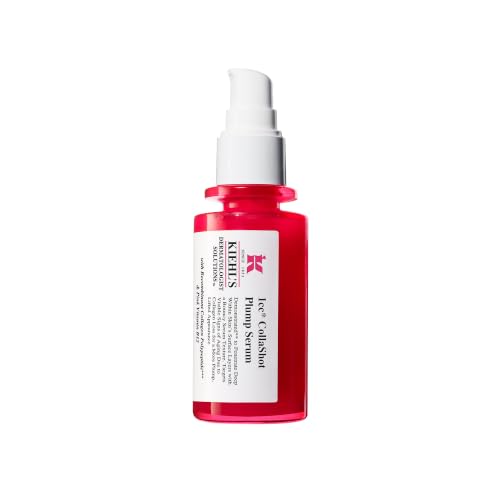
Kiehl’s 1cc CollaShot Plump Serum Ingredients at a Glance
Kiehl’s describes this serum as a daily anti-aging treatment designed to improve visible firmness and fullness. As with many global skincare products, ingredient lists may vary slightly between regions or change after reformulation.
- Aqua / Water
- Glycerin
- Alcohol Denat.
- Propanediol
- Rhamnose
- Hydroxyacetophenone
- Hydroxyethylpiperazine Ethane Sulfonic Acid
- Recombinant Collagen Polypeptide
- Sodium Hyaluronate
- Caprylyl Glycol
- Citric Acid
- Sodium Citrate
- Adenosine
- Xanthan Gum
- Biosaccharide Gum-1
- Phenoxyethanol
Kiehl’s 1cc CollaShot Plump Serum Ingredients: My Analysis
The formula is relatively streamlined instead of relying on a long list of trendy actives. What stands out to me is that Kiehl’s focuses on just a handful of ingredients intended to support visible plumping and smoother-looking skin.
Recombinant Collagen Polypeptide
This is the ingredient that defines the product. Rather than using traditional animal-derived collagen, Kiehl’s uses a biosynthetic collagen-related polypeptide designed to resemble a fragment naturally found in human collagen, according to the official product information.
I can see why this ingredient attracts attention. Recombinant technology allows manufacturers to create highly consistent peptides without relying on animal sources, making the ingredient appealing from both scientific and sustainability perspectives.
The challenge is that publicly available human research specifically evaluating this exact ingredient in topical skincare remains limited. While peptide technology has shown encouraging findings in various clinical studies on cosmetic peptides, that evidence doesn’t automatically prove this particular serum will deliver identical results.
The manufacturer doesn’t disclose the exact concentration. Because of that, its amount in the finished formula cannot be determined, making it impossible to compare with concentrations used in published research.
Rhamnose
Rhamnose is a naturally occurring plant-derived sugar that has attracted interest for its potential effects on aging skin. It appears in several cosmetic formulations intended to improve skin texture and firmness.
Research suggests rhamnose may interact with skin structures involved in aging and could help support dermal function. Some laboratory and human cosmetic studies have reported improvements in visible skin appearance, although the overall evidence remains fairly limited compared with established ingredients like retinoids.
What I find encouraging is that rhamnose has generally demonstrated good skin compatibility in topical products. However, the available evidence supports the ingredient broadly rather than proving this specific formulation produces the same outcomes.
Again, the manufacturer does not reveal the concentration, so its likely contribution within this serum cannot be determined from the ingredient list alone.
Sodium Hyaluronate
Sodium hyaluronate is the salt form of hyaluronic acid and serves primarily as a humectant. It attracts water to the skin’s surface, helping improve hydration and temporarily enhance the appearance of fine lines.
Its benefits are among the best established in cosmetic skincare. Multiple systematic reviews of topical hyaluronic acid have found that appropriately formulated products can improve skin hydration while contributing to smoother-looking skin.
One reason I like seeing sodium hyaluronate here is that its mechanism fits the serum’s plumping claims. Better hydration can noticeably improve skin’s appearance, even though it doesn’t replace lost collagen.
The exact amount isn’t disclosed. That means we can’t judge whether its concentration matches those evaluated in published clinical studies.
Glycerin
Glycerin is one of the most extensively studied moisturizing ingredients used in skincare. It functions as a humectant by drawing water into the outer skin layers and reducing moisture loss.
Its effectiveness is supported by extensive clinical evidence and dermatology guidance. Organizations including DermNet recognize glycerin as a reliable ingredient for improving skin hydration and supporting barrier function.
I was pleased to find glycerin included because it complements the serum’s plumping objective. Well-hydrated skin naturally appears smoother and fuller, making glycerin an evidence-based choice for this type of product.
Adenosine
Adenosine is a naturally occurring molecule found throughout the body and has become a well-established cosmetic ingredient. It’s commonly included in anti-aging products because it may help soften the appearance of fine lines over time.
Clinical studies have reported modest improvements in wrinkle appearance with topical adenosine, and cosmetic regulators consider it an accepted anti-wrinkle ingredient in skincare. The evidence is encouraging, although it’s less extensive than for ingredients such as retinoids or sunscreen.
I like that adenosine supports the serum’s overall anti-aging goal rather than relying on hydration alone. Still, the manufacturer doesn’t disclose its concentration, so the formula can’t be directly compared with the studies that evaluated topical adenosine.
Other Ingredients
- Alcohol Denat.: Solvent that improves product texture and absorption. It may increase dryness or irritation in sensitive skin, particularly with frequent use.
- Propanediol: Solvent and humectant that helps dissolve ingredients while contributing light hydration. Generally well tolerated.
- Hydroxyacetophenone: Antioxidant and preservative booster that helps stabilize the formulation and improve preservation. Low irritation potential in cosmetic use.
- Hydroxyethylpiperazine Ethane Sulfonic Acid: pH-adjusting ingredient that helps maintain formula stability and supports ingredient performance.
- Caprylyl Glycol: Humectant and preservative-supporting ingredient that also helps improve skin feel. Generally considered safe in cosmetic concentrations.
- Citric Acid: pH adjuster that keeps the formulation within an appropriate acidity range. Rarely may sting compromised skin.
- Sodium Citrate: Buffering agent that helps maintain consistent product pH and formulation stability.
- Xanthan Gum: Thickener that provides the serum’s smooth consistency while helping suspend ingredients evenly.
- Biosaccharide Gum-1: Moisturizing polysaccharide that forms a lightweight film, helping improve comfort and reduce moisture loss.
- Phenoxyethanol: Widely used preservative that protects against microbial contamination. Current cosmetic safety assessments support its use within established concentration limits.
Safety Concerns and Controversies
The biggest practical concern is the presence of denatured alcohol. Many people tolerate it well, but those with very dry, sensitive, or compromised skin may notice increased dryness or irritation, especially if it’s combined with other potentially irritating skincare products.
The remaining ingredients have reassuring safety profiles when used as intended in cosmetics. Preservatives such as phenoxyethanol have been extensively reviewed by cosmetic safety authorities, and current evidence supports their use within regulated limits.
My main reservation isn’t a safety issue but an evidence issue. The serum’s headline recombinant collagen technology is intriguing, yet independent human research specific to this finished product remains limited, and undisclosed ingredient concentrations make its likely performance difficult to judge.
Kiehl’s 1cc CollaShot Plump Serum: My Verdict
I think this is a thoughtfully designed formula that combines well-established moisturizing ingredients with newer collagen-related technology. The hydration side of the formula is supported by solid evidence, while the peptide-based approach has scientific plausibility.
I’m less convinced by the marketing emphasis on collagen restoration because the available evidence doesn’t yet demonstrate that this finished serum can reproduce the biological effects implied by its promotional language. The undisclosed concentrations also limit how confidently anyone can assess its likely effectiveness.
Overall, I’d describe Kiehl’s 1cc CollaShot Plump Serum as promising but difficult to judge. It’s worth considering if you’re looking for a hydrating anti-aging serum and are comfortable paying for innovative ingredients whose product-specific clinical evidence is still developing.
Disclaimer
This review is based primarily on the published ingredient list and currently available scientific evidence. Even ingredients supported by research don’t guarantee identical results for every user. The information is educational and shouldn’t replace personalized medical or dermatological advice.