
Daily sunscreen is one of the most effective ways to reduce sun-related skin damage, yet many people also want extra antioxidant protection against environmental stressors. Products that promise both benefits in a single step have become increasingly popular.
La Roche-Posay Anthelios AOX Antioxidant Serum SPF 50 combines broad-spectrum chemical sunscreen filters with vitamins and botanical antioxidants. On paper, that combination looks appealing for anyone seeking UV protection alongside ingredients associated with brighter and healthier-looking skin.
Still, an ingredient list often tells a more balanced story than marketing alone. In this review, we’ll examine what each important ingredient actually does, where the scientific evidence is strongest, where uncertainties remain, and whether the overall formula appears worth considering.
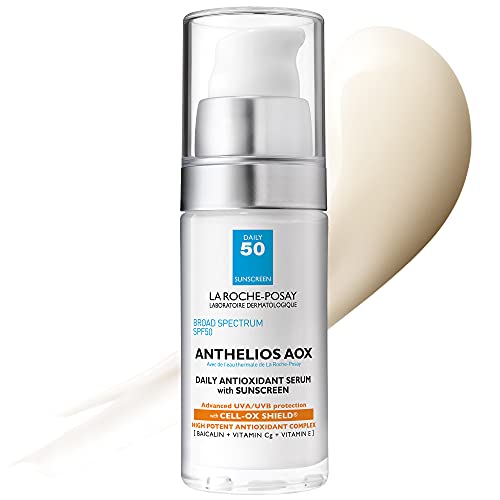
La Roche-Posay Anthelios AOX Serum Ingredients at a Glance
The official U.S. formula combines five FDA-approved chemical sunscreen filters with antioxidant ingredients and a lightweight silicone-based serum vehicle. Formulas can vary between countries and may change over time.
- Avobenzone 2.68%
- Homosalate 9.60%
- Octisalate 2.88%
- Octocrylene 5.38%
- Oxybenzone 3.46%
- Water (Aqua)
- Dimethicone
- Cyclopentasiloxane
- Tocopherol
- Ascorbyl Glucoside
- Silica
- PEG-10 Dimethicone
- Polymethylsilsesquioxane
- PEG-20
- Aluminum Hydroxide
- Stearic Acid
- Scutellaria Baicalensis Root Extract
- Cassia Alata Leaf Extract
- Disodium EDTA
La Roche-Posay Anthelios AOX Serum Ingredients: My Analysis
The formula is built around two goals rather than one. Most of the work comes from the sunscreen filters, while several antioxidant ingredients are included to complement daily UV protection.
Broad-Spectrum UV Filters
The primary active ingredients are avobenzone, homosalate, octisalate, octocrylene, and oxybenzone. Unlike many skincare ingredients, these filters have disclosed concentrations because sunscreen products are regulated as over-the-counter drugs in the United States.
Together, these filters provide SPF 50 broad-spectrum protection against ultraviolet radiation. Regular sunscreen use has consistently been shown to reduce sunburn while also helping lower the long-term risk of photoaging and certain skin cancers when used correctly, according to the official FDA drug label.
What stands out to me is that the product openly discloses each active concentration. That’s a meaningful advantage because there is no guesswork about the sunscreen system itself. The formula relies on well-established UV filters rather than experimental ingredients.
The tradeoff is that some users experience irritation or eye stinging from chemical sunscreen filters. People with highly sensitive skin may tolerate mineral sunscreens better, although tolerance varies considerably between individuals.
Ascorbyl Glucoside
Ascorbyl glucoside is a stable vitamin C derivative designed to gradually convert into ascorbic acid after application. Compared with pure vitamin C, it generally offers better formulation stability but may act more slowly.
Research suggests vitamin C derivatives can contribute to antioxidant protection and may help improve uneven skin tone by reducing oxidative stress and influencing melanin production. Much of the strongest clinical evidence, however, comes from pure L-ascorbic acid rather than ascorbyl glucoside itself.
The manufacturer does not disclose the exact concentration. Because of that, I cannot determine how closely this product matches concentrations evaluated in published clinical studies. The available evidence supports the ingredient generally, but it doesn’t prove this specific serum will deliver identical results.
I can see why this ingredient was included. Vitamin C complements sunscreen conceptually because antioxidants may help neutralize some free radicals generated by UV exposure, although they should never replace sunscreen itself.
Tocopherol
Tocopherol, commonly known as vitamin E, is another antioxidant frequently paired with sunscreen products. It also functions as a stabilizing ingredient that helps protect oils within the formula from oxidation.
Several studies suggest vitamin E helps reduce oxidative damage in skin, particularly when combined with other antioxidants such as vitamin C. The combination appears more effective than either ingredient alone in many experimental settings.
What I find encouraging is that vitamin E fits logically into the overall formulation. Still, the exact amount is not revealed, so its concentration in this formula cannot be determined. Most supporting research also evaluates different formulations than this finished product.
Scutellaria Baicalensis Root Extract
Scutellaria baicalensis, sometimes called Chinese skullcap, is a botanical extract rich in flavonoids such as baicalin. These compounds have attracted attention because of their antioxidant and anti-inflammatory properties.
The evidence I found is promising, although much of it comes from laboratory and animal research. Human clinical evidence for topical skincare remains more limited, so the ingredient should be viewed as supportive rather than a proven star performer.
The manufacturer does not disclose the exact concentration. That means it’s impossible to determine whether the amount resembles those used in published studies. I see it as a reasonable addition, but not one that substantially changes my overall assessment.
Cassia Alata Leaf Extract
Cassia alata leaf extract is included because of its antioxidant activity. Laboratory research suggests it may help protect skin cells from some forms of UV-related oxidative stress.
What makes this ingredient interesting is that it supports the product’s overall theme rather than replacing sunscreen. Antioxidants may reduce some oxidative damage, but they cannot block ultraviolet radiation on their own.
Human clinical evidence for topical Cassia alata remains relatively limited compared with established sunscreen filters. The exact amount is not revealed, so the available research cannot be directly applied to this specific serum.
Other Ingredients
- Water (Aqua): Primary solvent that dissolves water-soluble ingredients and helps distribute the formula evenly. No meaningful safety concerns under normal cosmetic use.
- Dimethicone: Silicone emollient that creates a smooth feel, reduces moisture loss, and improves spreadability. Generally well tolerated, including by many sensitive skin types.
- Cyclopentasiloxane: Lightweight volatile silicone that improves application and leaves minimal residue. Current evidence supports its safety in topical cosmetic use.
- Silica: Absorbent powder that reduces shine and improves the product’s finish. May feel slightly drying for some users with very dry skin.
- PEG-10 Dimethicone: Silicone-based emulsifier that helps water and oils remain evenly mixed. Cosmetic safety assessments support its intended topical use.
- Polymethylsilsesquioxane: Texture-enhancing polymer that creates a smoother, softer skin feel and improves cosmetic elegance. No significant safety concerns during normal use.
- PEG-20: Solvent and formulation stabilizer that improves ingredient compatibility. Well studied for topical cosmetic exposure.
- Aluminum Hydroxide: Stabilizer and coating ingredient used in cosmetic formulations. Current evidence does not indicate meaningful risk at cosmetic exposure levels.
- Stearic Acid: Fatty acid that functions as an emollient and emulsifier. Usually well tolerated, although occasional sensitivity is possible.
- Disodium EDTA: Chelating agent that improves product stability by binding trace metals. It has a long history of safe cosmetic use.
Safety Concerns and Controversies
Most healthy adults can use this serum as directed, but chemical sunscreen filters may occasionally cause irritation, particularly around the eyes. Anyone with known sunscreen allergies should review the active ingredients carefully before purchasing.
Oxybenzone has received considerable public attention because laboratory and environmental studies have raised questions about hormone activity and ecological effects. Current regulatory authorities continue to permit its use within approved limits, and available human evidence hasn’t demonstrated harm from normal sunscreen use at permitted concentrations.
The antioxidant ingredients themselves don’t raise major safety concerns for most users. As with nearly any skincare product, irritation or allergic reactions remain possible, especially if the skin barrier is already damaged or unusually sensitive.
La Roche-Posay Anthelios AOX Serum: My Verdict
I think the greatest strength of this formula is its foundation. The sunscreen system is transparent, uses disclosed active concentrations, and aligns well with established evidence supporting daily broad-spectrum UV protection.
The added antioxidants make scientific sense, especially vitamins C and E. However, the manufacturer doesn’t disclose their concentrations, so I would have more confidence if that information were available. The supporting research is encouraging, but it doesn’t guarantee the finished product delivers the same clinical benefits.
Overall, I consider this serum worth considering for people who want a lightweight chemical sunscreen with complementary antioxidant ingredients. Its core sunscreen performance is the strongest part of the formula, while the antioxidant claims should be viewed as a potentially useful bonus rather than a proven outcome.
Disclaimer
This review is based primarily on the ingredient list and currently available scientific evidence. Even ingredients supported by research may not produce identical results for every user. The information is educational and should not replace individualized medical advice.