
Fine or thinning-looking hair can be frustrating to style because it often lacks volume, texture, and staying power. Thickening pastes aim to create the appearance of fuller hair by coating individual strands, adding structure, and providing flexible hold without making hair feel overly stiff or greasy.
Aveda Men Pure-Formance Thickening Paste is positioned as a botanical styling product that instantly thickens the appearance of hair while delivering a natural-looking finish. According to the official Aveda product page, the formula is 91% naturally derived and highlights ingredients such as amla fruit extract alongside plant oils, waxes, and conditioning agents.
Marketing claims, however, only tell part of the story. The ingredient list offers a much clearer picture of how the product is likely to perform and where its limitations lie. In this review, I examine the formula ingredient by ingredient, compare the available scientific evidence with the advertised claims, and explain what buyers can realistically expect.
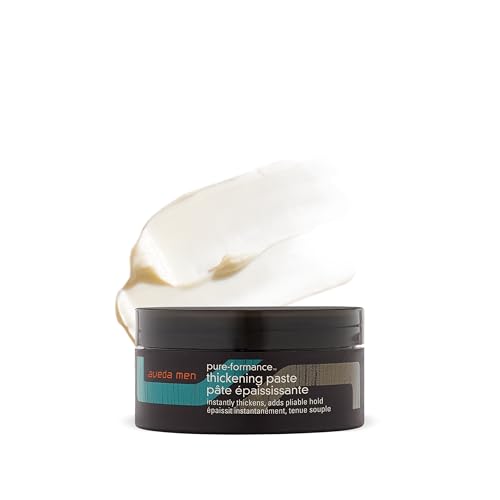
Aveda Men Pure-Formance Thickening Paste Ingredients at a Glance
The following ingredient list comes from Aveda’s official product information. Keep in mind that formulations may vary slightly by region or change over time, so always check the packaging of the product you purchase.
- Water (Aqua, Eau)
- Canola Oil
- Hydrogenated Castor Oil
- Oryza Sativa (Rice) Bran Wax
- C14-22 Alcohols
- Glycerin
- Dimethicone
- Jojoba Esters
- PEG-40 Hydrogenated Castor Oil
- Cetearyl Alcohol
- Alcohol Denat.
- Aluminum Starch Octenylsuccinate
- Coco-Glucoside
- Emblica Officinalis (Amla) Fruit Extract
- Orbignya Oleifera (Babassu) Seed Oil
- Boswellia Serrata Extract
- Scutellaria Baicalensis Root Extract
- Glycyrrhiza Glabra (Licorice) Root Extract
- Yeast Extract
- Calophyllum Inophyllum (Tamanu) Seed Oil
- Starch Hydroxypropyltrimonium Chloride
- Hydrolyzed Algin
- Malt Extract
- Ursolic Acid
- Tocopherol
- Glycine Soja (Soybean) Oil
- Creatine
- Adenosine Phosphate
- Acetyl Carnitine HCl
- Glyceryl Stearate
- Zea Mays (Corn) Starch
- Silica
- PVP
- C12-20 Alkyl Glucoside
- PEG-100 Stearate
- Simethicone
- Sodium Chloride
- Fragrance (Parfum)
- Farnesol
- Eugenol
- Linalool
- Citronellol
- Citral
- Limonene
- Benzyl Benzoate
- Coumarin
- Geraniol
- Isoeugenol
- Potassium Sorbate
- Sodium Benzoate
- Phenoxyethanol
Aveda Men Pure-Formance Thickening Paste Ingredients: My Analysis
This formula relies on a combination of styling waxes, conditioning oils, botanical extracts, and film-forming polymers rather than a single hero ingredient. What stood out to me is that most of the immediate thickening effect is likely mechanical rather than biological.
Emblica Officinalis (Amla) Fruit Extract
Amla is the botanical ingredient Aveda emphasizes most heavily in its marketing. The fruit contains polyphenols, vitamin C derivatives, and antioxidant compounds that have attracted interest in hair care research.
Laboratory and early clinical research suggests amla may help protect hair fibers from oxidative damage and may influence some biological pathways involved in hair growth. Several findings summarized in peer-reviewed reviews of botanical ingredients for hair care are encouraging, but much of the evidence comes from laboratory studies, animal research, or formulations that differ substantially from a rinse-off or styling paste.
The manufacturer does not disclose the concentration of amla extract. While its position in the ingredient list indicates it appears before many botanical extracts, that does not reveal its actual percentage. I find the ingredient scientifically interesting, but the available evidence does not prove this styling product itself can make hair permanently thicker or stimulate meaningful hair growth.
Hydrogenated Castor Oil and Rice Bran Wax
These two ingredients form the structural backbone of the paste. Hydrogenated castor oil is a vegetable-derived wax, while rice bran wax is obtained from rice bran oil during refining. Together they create the product’s texture and provide the flexible hold expected from a thickening paste.
Rather than changing the biology of hair, these waxes coat individual fibers and increase separation between strands. This physical effect creates the appearance of fuller hair while also helping hairstyles maintain shape throughout the day.
I was pleased to see plant-derived waxes doing most of the heavy lifting here because they are well suited for styling products. Their benefit is immediate and predictable, although temporary. Once the product is washed out, the thickening effect disappears.
Glycerin and Dimethicone
Glycerin is one of the most extensively studied cosmetic humectants and has a well-established ability to attract water into the hair and outer skin layers, helping improve softness and flexibility. Its moisturizing properties are widely recognized in medical references on humectants.
Dimethicone complements glycerin by forming a smooth protective coating over the hair shaft. According to reviews published in the International Journal of Trichology and related cosmetic science literature, silicones can reduce friction, improve shine, and decrease mechanical damage during grooming.
Neither ingredient actually increases the number of hair strands or changes hair diameter permanently. Instead, they improve how hair feels and behaves during styling. That distinction is important because the available evidence supports the ingredients’ conditioning effects without proving long-term thickening.
PVP and Aluminum Starch Octenylsuccinate
PVP is a classic film-forming polymer used in countless styling products. It dries into a flexible network that helps hold hair in place while maintaining some movement.
Aluminum Starch Octenylsuccinate contributes a dry, matte texture and absorbs excess oil from both hair and scalp. This helps create additional visual volume, particularly for fine hair that tends to collapse from natural scalp oils.
These ingredients may not receive much marketing attention, but in my view they contribute more to the product’s day-to-day performance than many of the botanical extracts. Their effects are cosmetic rather than therapeutic, yet they directly support the product’s primary styling claims.
Other Ingredients
- Canola Oil: Plant-derived emollient that softens hair and improves spreadability. Generally well tolerated with a very low risk of irritation.
- C14-22 Alcohols: Fatty alcohol blend that thickens the formula and stabilizes emulsions. Unlike simple alcohols, these are not typically drying.
- Jojoba Esters: Lightweight conditioning agents that improve slip and reduce roughness. Well tolerated by most users.
- PEG-40 Hydrogenated Castor Oil: Solubilizer that keeps oil-based ingredients evenly dispersed. Rarely associated with irritation at cosmetic use levels.
- Cetearyl Alcohol: Fatty alcohol that provides structure and conditioning. Considered safe and non-drying in leave-in hair products.
- Alcohol Denat.: Fast-evaporating solvent that improves texture and drying time. High amounts may be drying for very sensitive scalps.
- Coco-Glucoside: Mild plant-derived surfactant and emulsifier that helps stabilize the formulation. Low irritation potential.
- Orbignya Oleifera (Babassu) Seed Oil: Emollient oil that adds softness and helps reduce moisture loss from the hair surface.
- Boswellia Serrata Extract: Botanical extract included primarily for antioxidant and soothing properties. Human evidence in styling products remains limited.
- Scutellaria Baicalensis Root Extract: Plant extract rich in flavonoids with antioxidant activity. Direct evidence for cosmetic hair benefits is limited.
- Glycyrrhiza Glabra (Licorice) Root Extract: Botanical ingredient with anti-inflammatory properties supported in skin research, although its role here is likely supportive.
- Yeast Extract: Source of peptides and micronutrients used as a conditioning ingredient. Evidence for topical hair thickening is limited.
- Calophyllum Inophyllum (Tamanu) Seed Oil: Conditioning oil that helps soften hair. May rarely trigger allergy in sensitive individuals.
- Starch Hydroxypropyltrimonium Chloride: Modified starch that improves conditioning and reduces static electricity.
- Hydrolyzed Algin: Seaweed-derived conditioning polymer that contributes to texture and moisture retention.
- Malt Extract: Botanical conditioning ingredient included mainly for formulation support rather than proven hair growth effects.
- Ursolic Acid: Plant compound studied in laboratory research for hair biology, but topical cosmetic evidence in humans remains limited.
- Tocopherol: Vitamin E antioxidant that helps protect the formula from oxidation while offering minor conditioning benefits.
- Glycine Soja (Soybean) Oil: Plant oil that improves softness and enhances the product’s spreadability.
- Creatine: Amino acid derivative included for conditioning. Research supporting cosmetic hair strengthening is still emerging.
- Adenosine Phosphate: Cellular energy-related ingredient. Evidence supporting topical hair benefits is limited and does not directly apply to this product.
- Acetyl Carnitine HCl: Included as a specialty conditioning ingredient. Human evidence for styling performance is minimal.
- Glyceryl Stearate: Emulsifier that keeps oil and water phases blended while adding a smooth feel.
- Zea Mays (Corn) Starch: Absorbent powder that helps create volume and reduces oily appearance.
- Silica: Mineral absorbent that enhances matte texture and improves grip without significantly weighing hair down.
- C12-20 Alkyl Glucoside: Mild emulsifier derived partly from plant sugars that stabilizes the formulation.
- PEG-100 Stearate: Emulsifier that maintains a stable cream texture. Considered safe in cosmetic use.
- Simethicone: Silicone-based anti-foaming ingredient that also contributes to smooth product application.
- Sodium Chloride: Adjusts viscosity and product consistency. Rarely problematic except on very irritated scalps.
- Fragrance (Parfum): Provides the product’s signature scent. Fragrance mixtures remain one of the most common causes of cosmetic contact allergy.
- Farnesol, Eugenol, Linalool, Citronellol, Citral, Limonene, Benzyl Benzoate, Coumarin, Geraniol, Isoeugenol: Fragrance components that can oxidize over time and may trigger allergic reactions in susceptible individuals.
- Potassium Sorbate: Preservative that helps prevent mold and yeast growth. Generally well tolerated.
- Sodium Benzoate: Preservative used to inhibit microbial contamination. Considered safe within approved cosmetic concentrations.
- Phenoxyethanol: Widely used preservative supported by safety assessments from the Scientific Committee on Consumer Safety when used within permitted limits.
Safety Concerns and Controversies
From an ingredient perspective, I do not see any major safety concerns for most healthy adults using this product as directed. The formula consists largely of established cosmetic ingredients with long histories of safe use. The biggest consideration is the extensive fragrance blend. According to the DermNet overview of fragrance allergy, fragrance ingredients are among the most common causes of allergic contact dermatitis in cosmetic products. Anyone with a known fragrance allergy or a highly sensitive scalp should perform a patch test before regular use.
The presence of denatured alcohol may also concern some users. In this type of styling paste, it primarily improves texture and application. While it could contribute to dryness on an already irritated scalp, the available evidence does not support the idea that normal cosmetic use makes healthy hair fall out or permanently damages the scalp.
Several botanical extracts and specialty ingredients, including ursolic acid, creatine, and adenosine phosphate, are sometimes associated with hair growth discussions online. My main concern is not safety but interpretation. The research supporting these ingredients often involves different concentrations, delivery systems, or experimental conditions. That evidence should not be viewed as proof that this finished product produces the same biological effects.
Aveda Men Pure-Formance Thickening Paste: My Verdict
I think this formula makes sense for what it is designed to do. The combination of waxes, starches, polymers, conditioning agents, and lightweight silicones provides a logical foundation for creating fuller-looking, more textured hair. The immediate thickening effect comes primarily from proven cosmetic mechanisms rather than speculative biological ones, and I appreciate that distinction.
I am less convinced by any implication that the botanical ingredients meaningfully improve long-term hair thickness. While amla and several plant extracts have interesting early research behind them, the manufacturer does not disclose their concentrations, and the current scientific evidence does not establish that this styling paste can permanently increase hair density. Even so, the overall formulation appears thoughtfully balanced, uses well-established styling technology, and should perform well for its intended cosmetic purpose.
Overall, I consider Aveda Men Pure-Formance Thickening Paste worth considering for people who want flexible hold and the appearance of thicker hair without relying on heavy styling products. Buyers looking for genuine hair regrowth or treatment of hair loss should instead look toward products containing ingredients with stronger clinical evidence, rather than expecting a styling paste to deliver therapeutic results.
Disclaimer
This review is based primarily on the published ingredient list and currently available scientific evidence. Ingredients with supporting research do not guarantee identical results for every user or every formulation. This article is educational only and should not replace personalized medical advice from a qualified healthcare professional.